
Wallpaper hanging: professional wall covering with a guaranteed result in Pornainen
Wallpaper hanging is not just «sticking strips on» but a technical process: wall assessment, surface preparation, priming, pattern repeat and cutting layout, correct choice of adhesive for the wallpaper type, precise seam alignment and final trimming. A mistake at any step usually shows up as bubbles, «misaligned» seams, adhesive stains or peeling at the corners. Manufacturer data sheets clearly set critical conditions: dry, sound substrate, residual moisture limits, correct layout, windows/doors closed during drying (no drafts), etc. Available in Pornainen.
Why Tyoon
- Surface assessment, priming and preparation to standards
- Pattern repeat and cutting layout, seams without gaps
- Correct adhesive and drying conditions without drafts
- Wallpapering on ready walls or turnkey package with prep
Steps
- 1Describe the job and area
- 2Get offers from specialists
- 3Choose a contractor and confirm the order
Wallpaper hanging service
Professional wallpaper hanging usually includes: surface assessment (strength, absorbency, moisture), removal of old coverings (if any), local defect repairs, priming, mixing adhesive per instructions, vertical layout with plumb/laser, cutting strips allowing for pattern repeat, hanging «butt-jointed», smoothing and removing air, trimming at ceiling/baseboard, cleaning fresh adhesive from the surface and drying advice. Data sheets for non-woven system adhesives stress that walls must be clean, sound and dry (permissible residual moisture is stated), and windows and doors kept closed until the adhesive is fully dry.
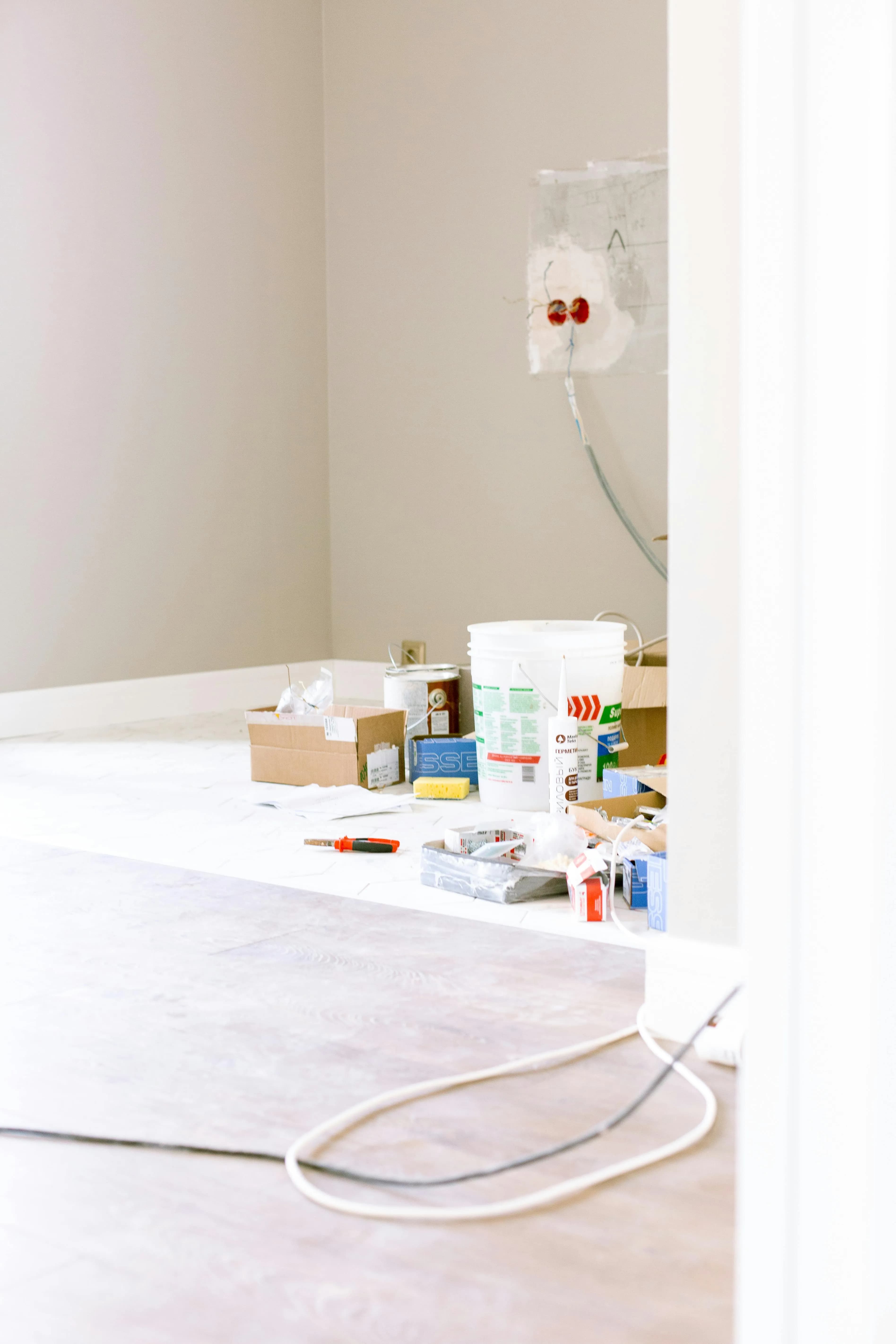
A key fork in the technology is wallpaper type and adhesive application: for many non-woven and vinyl-on-non-woven wallpapers, adhesive is designed to be applied directly to the wall, which speeds work and reduces the risk of sheet distortion.
Hanging is often ordered either as a standalone service (only «on ready walls») or as a turnkey package with preparation (removal of old wallpaper, filling/sanding, primer). Manufacturer instructions for primers and adhesives specify the order of work and conditions (temperature, humidity, drying pauses), which easily becomes a service quality promise on the landing page.
Why hire a professional
The main value of a professional is reducing «redo» risk. Quality hanging depends on wall condition: adhesive manufacturers separately require removing weak/unsound layers, cleaning contamination, filling cracks and only then priming. This is the stage where a beginner often «saves time» and then gets corner peeling and visible seams.
A second reason is accurate cutting and pattern repeat. Pattern repeat (design step) dictates the strip length allowance and leads to waste if not allowed for; this is explained in specialist hanging and preparation guides.
A third reason is observing drying and microclimate. Data sheets for non-woven wallpaper adhesive state the rule: keep windows and doors firmly closed during drying, otherwise the risk of uneven drying and defects increases.
Finally, a professional helps choose compatible materials (adhesive, primer, wallpaper type for the room and humidity). For example, wallpaper choice guides often note that vinyl coatings are often chosen for rooms with higher humidity, and liquid wallpaper when a seamless effect and partial wall levelling are needed.
Work technology and typical workflow
Surface preparation. Wall inspection: check strength of existing layers, absorbency, presence of mould/stains, moisture assessment. For non-woven system adhesives, data sheets often require a limit on residual moisture of the wall construction (guide: not above 4%). Demolition: remove old wallpaper/distemper, clean dust, grease, oil; remove weak areas. Defect repair: fill cracks and holes (important for thin/light and «see-through» sheets). Priming: deep-penetration acrylic primers reduce absorbency and strengthen the substrate; manufacturers give consumption and drying time ranges (e.g. Ceresit CT 17 Profi Grunt: approx. 0.05–0.25 kg/m² and 2–4 h drying; KNAUF Tiefengrund product card: approx. 0.1 kg/m² and about 3 h drying).
Establish a vertical line with plumb/laser — the first strip is hung from it. Data sheets for non-woven adhesive even give a guide for setback from window/door (e.g. about 50 cm for 0.53 m roll width or 1.03 m for 1.06 m width). Mix adhesive strictly per instructions: usually «vortex» in water → add powder → stand 5–10 min → remix. This is the typical scheme in wallpaper adhesive data sheets. For high absorbency, the substrate is sometimes recommended to be additionally «primed» with a weak adhesive solution (instructions sometimes mention a ratio of about 1:40 adhesive–water as an option).
Cut sheets to wall height with a small trimming allowance; allow for pattern repeat so the design matches at seams. Apply adhesive: for many non-woven systems — to the wall in an even layer (data sheets often recommend at least ~1 mm), brush corners and baseboard areas. Hang the sheet vertically, smooth top to bottom and centre to edges, expel air, butt the next sheet, trim with knife along spreader/ruler. Remove fresh adhesive from the wallpaper surface immediately (damp sponge/cloth, without «smearing»). Drying: keep windows/doors closed during adhesive drying, avoid drafts; final cure is given as a range (often 24–48 hours depending on conditions).
Which wallpaper to choose
Wallpaper type affects technology (adhesive, primer, wall requirements, washability, etc.). Popular categories: paper — budget and eco-friendly; non-woven — durable and easy to work with; vinyl — often for damp or heavy-use areas; textile — decorative premium; liquid — seamless layer and partial levelling.
- Vinyl. Pros: withstand wet cleaning; often suitable for damp rooms. Cons: need flatter substrate on light textures. Rooms: kitchen, hall, corridor, some bathroom zones.
- Non-woven (incl. vinyl on non-woven). Pros: durable, often adhesive on wall, can hide minor defects. Cons: seam errors show more on contrasting patterns. Rooms: living room, bedroom, children's room, corridor; also paintable.
- Paper. Pros: affordable, classic. Cons: sensitive to moisture. Rooms: bedroom, living room, dry rooms.
- Textile. Pros: premium effect, texture depth. Cons: visible seams critical. Rooms: living room, study, bedroom.
- Liquid. Pros: seamless, local repair. Cons: need own priming system; extra care in damp zones. Rooms: bedroom, living room, corridor; accent walls.
Note on wallpaper type comparison
Durability is given as a consumer comparison of types; actual life depends on substrate, humidity, care and the specific collection.
Adhesive, primers and consumables: minimum set
The «minimum set» is usefully split into: (a) what the professional always needs; (b) what depends on wall condition.
Deep-penetration primer: manufacturers give consumption and drying time guides (e.g. Ceresit CT 17 Profi Grunt: 0.05–0.25 kg/m² and 2–4 h; KNAUF Tiefengrund: about 0.1 kg/m² and about 3 h drying). Wallpaper adhesive for type: data sheets state consumption (e.g. 150–250 ml/m² for universal adhesive for paper/some vinyl jobs) and application method. Tools and consumables: roller/brush, mixing container, smoothing brush/spreader, knife and blades, plumb/laser, tape, masking tape and cover film, sponges for removing adhesive «while fresh». (The sequence — layout, application, smoothing, trimming, cleaning — is described in adhesive instructions.)
Table: materials checklist per m²
Area = wall area to be covered (perimeter × height minus openings). Allow 5–15% for pattern matching and trimming.
- Roll wallpaper: ~0.19 rolls/m² (Euro roll 0.53×10.05 m) + 5–15% allowance.
- Wallpaper adhesive: guide 150–250 ml/m².
- Deep-penetration primer: guide 0.05–0.25 kg/m².
- Knife blades: 0.1–0.2 per m² (approx).
- Masking tape/film: per room, with allowance.
- Sponges/cloth: 1–3 per room.
Choosing and ordering materials
- Scenario A — client buys materials, professional brings consumables. Master confirms compatibility and consumables list.
- Scenario B — professional buys everything to estimate. Selects primer and adhesive for substrate/humidity; for light/thin sheets manufacturers recommend white backing/priming.
- Scenario C — joint purchase. Client chooses wallpaper (design), professional chooses chemistry (primer, adhesive, antifungal if needed) per instructions.
Wallpapers (roll, non-woven, paper)
- Decor Maison (Sweden), Boråstapeter (Sweden), Rasch (Germany), AS Creation (Germany), Pihlgren & Ritola (Finland), Versace Home / Marburg.
Liquid wallpaper / decorative coatings
- Tikkurila Taika, Tikkurila Tunto, Silk Plaster, Sadolin (AkzoNobel), Terraco Handycoat.
Adhesives and primers
- Metylan, PUFAS, KLEO, Bostik (Quelyd), Casco, Kiilto, Tikkurila.
Quality acceptance criteria
What is usually considered completed work:
- Seams even, butt-jointed, no gaps.
- No bubbles/wrinkles after initial drying.
- No adhesive stains on the face.
- Pattern matches if there was repeat.
- Corners and baseboard areas well pasted, not lifting.
- Drying regime observed.
Safety
Microclimate and ventilation. Manufacturer instructions for adhesives recommend keeping windows and doors closed during drying to avoid drafts and defects (bubbles, peeling). At the same time, the work itself is safer with reasonable ventilation between stages and without strong air flows.
Temperature and humidity. Primer/adhesive manufacturers set working temperature ranges (often +5…+25/30 °C) and air humidity limits; these conditions are worth stating on the service card as «site requirements».
Mould and damp zones. If there are signs of mould on the wall, primer manufacturers recommend separate antifungal treatment before priming/finishing. For damp rooms it is important to combine a moisture-resistant wallpaper type and adhesive with antifungal additives (stressed in adhesive data sheets).
Disposal and material residues. Manufacturer instructions differ: in Metylan hanging recommendations it is sometimes stated that ready adhesive residues may be stored for up to 10 days or disposed of in a certain way; for some systems/adhesives (e.g. liquid wallpaper materials) it is explicitly stated «do not pour into drains, water bodies or soil», and empty packaging with dried residue should be disposed of as construction/household waste. Practical rule: follow the instructions for your specific adhesive/primer; when in doubt, let residue dry and dispose of as solid waste.
Typical order examples and timing
«Hang wallpaper in room, walls ready»: guide 4–8 h for about 18 m²; adhesive drying 24–48 h without drafts. «Remove old + hang new»: +1–3 h to base; primer 2–4 h, adhesive 24–48 h. Thin light wallpaper/complex repeat: longer; drying regime critical.
Checklist before the professional arrives
- Clear access to walls; move furniture, remove decor.
- Decide who buys wallpaper/adhesive/primer; if you buy, check all rolls from same batch.
- Photograph walls in daylight (corners, radiators, reveals).
- Provide access to water and power; cover floor with film.
- If high humidity or mould — state in request for antifungal treatment and right adhesive.
Book wallpaper hanging
Submit a request for wallpaper hanging — state a convenient time and your budget. Professionals will reply with offers; you choose by rating and terms. Work payment is not processed through Tyoon.
FAQ
Can I hang wallpaper in the kitchen/bathroom?
Yes, if you choose a type suitable for damp areas (often vinyl) and follow the manufacturer’s requirements for the surface and adhesive (product sheets often state use in dry and damp rooms).
Why must windows stay closed after hanging?
Drafts speed up and «break» even drying: adhesive manufacturers explicitly require keeping doors and windows closed until fully dry — otherwise bubbles and peeling are possible.
How long does adhesive take to dry and when can I ventilate?
Final cure is often given as 24–48 hours (depending on temperature, humidity and porosity). Ventilation is only acceptable without strong air flows and in line with your specific adhesive’s instructions.
Will the specialist buy materials or will I?
Both are possible. A practical approach: you choose the wallpaper (design), the specialist chooses adhesive and primer per the instructions for the wallpaper and surface (adhesive manufacturers state «follow wallpaper manufacturers' recommendations»).
How to estimate the number of rolls?
Base calculation: wall area (perimeter × height − openings), then convert to rolls by roll size; add allowance for pattern repeat.